
History of Camp Ford
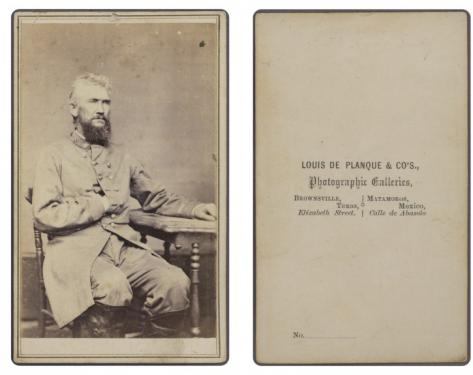
Col. John Salmon "RIP" Ford
Camp Ford was named in honor of Col. John Salmon “RIP” Ford—an epithet so earned because, during the Mexican-American War as adjutant, he sent official death notices with “R.I.P.” written at the top of the page.
Camp Ford Established
Camp Ford was initially established in 1862 as a Confederate training camp while the POW camp was established in August 1863. Prisoners came from every northern state with the exception of Vermont, Delaware, and Minnesota.
There was no stockade and the first prisoners (Union officers captured in Louisiana) were allowed to wander the area, alarming locals. With the arrival of nearly 800 new prisoners in late October 1863--and to pacify concerned citizens--a 4-acre, 16’ high stockade was built using local slave labor to limit detainees’ freedom.
Unlike some Civil War POW camps, Camp Ford had a low mortality rate of about 6%. Prisoners established control over the prison spring to keep it free from pollution, which ensured a high survival rate. Prisoners built their own shelter, which varied wildly: officers lived in log buildings while lower ranking men assembled crude “shebangs.” Pork and cornmeal constituted prisoners’ major food groups. All POWs endured a scurvy-induced, chigger-bitten, spider-assaulted, humidity-choked existence in East Texas until war’s end. There are 100 documented escapes from the Camp.
Confederate Victories
Confederate victories in Louisiana and Arkansas inundated the site with over 5,000 captured POWs, making previously tolerable conditions nearly unbearable. As a result, the open-air prison camp was tripled and enlarged to about 11 acres. By the end of June 1864, a total of 4,925 prisoners were recorded—earning Camp Ford the distinction of being the largest Confederate POW camp west of the Mississippi River.
Boredom plagued the prisoners, but they made the most of their situation. Some made squirrel-shaped clay art, others played an early form of baseball, and some men—with a stellar sense of humor—produced a newspaper called The Old Flag. The creatives made light of their dire situation. They named camp streets “Fifth Avenue” and “42nd Street,” and advertised that the Yankee Band would be performing at the 1st annual “Ball of the Prisoners of Camp Ford.”
An agreement between CS and US authorities allowed clothing and tools be sent through the lines in October 1864, enabling the prisoners to build reasonably substantial winter quarters for the last seven months of the war.
Closing of Camp Ford
Camp Ford closed on May 19, 1865. Confederate guards and Union prisoners all became celebratorily drunk at news of wars’ end. The formerly incarcerated began the arduous trek back home—on foot and via steamboat. Confederates began the major transition to Reconstruction: re-joining the Union and acknowledging their black brethren as free, enfranchised citizens.
In 1867, deceased prisoners were reinterred to the Alexandria National Cemetery in Pineville, LA.
Archaeological Investigations
Fieldwork conducted by the Center for Ecological Archaeology at Texas A&M University uncovered the material remains of those incarcerated at Camp Ford. Dr. Alston V. Thoms was the principal investigator. A multitude of items--including Minié balls, buttons, intricately carved horns, handmade clay art, and more--were discovered. Artifacts are located at SCHS and Texas A&M. An in-depth, technical report was produced in 2000 documenting the findings and interpretations. This report is available for purchase at the SCHS Museum Store.
Camp Ford Historical Park
Today, the site is a public park with walking trails, picnic area, and interpretive signage detailing Camp Ford's historical significance. The site is managed by Smith County Historical Society and owned by Smith County. If you are interested in hosting an event at the site, please contact Smith County government at (903) 590-4605.
Plan Your Visit
- Location: 6500 US Highway 271, Tyler, TX 75708 (0.8 miles outside Loop 323)
- Hours: Open daily from sunrise to sunset
- Admission: FREE
- Parking: Available on-site
- Pets are welcome as long as they are on a leash.
- Field Trips: Guided tours are available for school groups (advance scheduling with SCHS required)

Medal of Honor Recipients held at Camp Ford
Asten, Charles
Butts, George
Carmen, Isaac H.
White, Patrick H.
Spiegel Brothers at Camp Ford
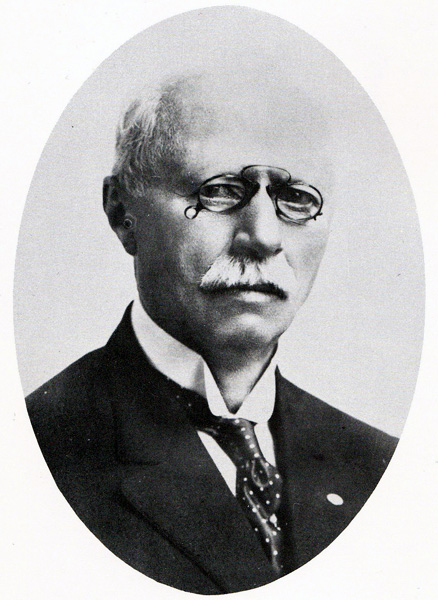
Joseph Spiegel (1840 - 1918)
The founder of the merchandising giant Spiegels, served as the sutler for the 120th Ohio Volunteer Infantry. He was captured on May 3, 1864, when the transport ship City Belle was ambushed on the Red River. Along with most of the 120th, Joseph was held at a camp until their final exchange on May 22, 1865.
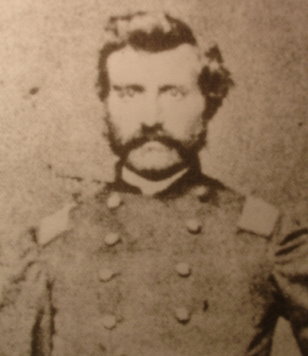
Marcus M. Spiegel (1829 - 1864)
Joseph's brother, Marcus Spiegel, was the colonel of the 120th Ohio and was mortally wounded during the engagement. The Spiegel family was composed of German Jews who immigrated to America in the 1840s. Marcus was one of the few Jews in the Union Army to achieve the rank of colonel.
Information on Camp Ford
We have gathered an extensive collection of Camp Ford materials, and our bibliography contains over 300 entries. We believe letters, diaries and materials likely exist in small or private collections, and we are interested in obtaining copies.
If you know of letters, diaries, etc. and are willing to share, please contact us.
Links to Chronicles available in our store:
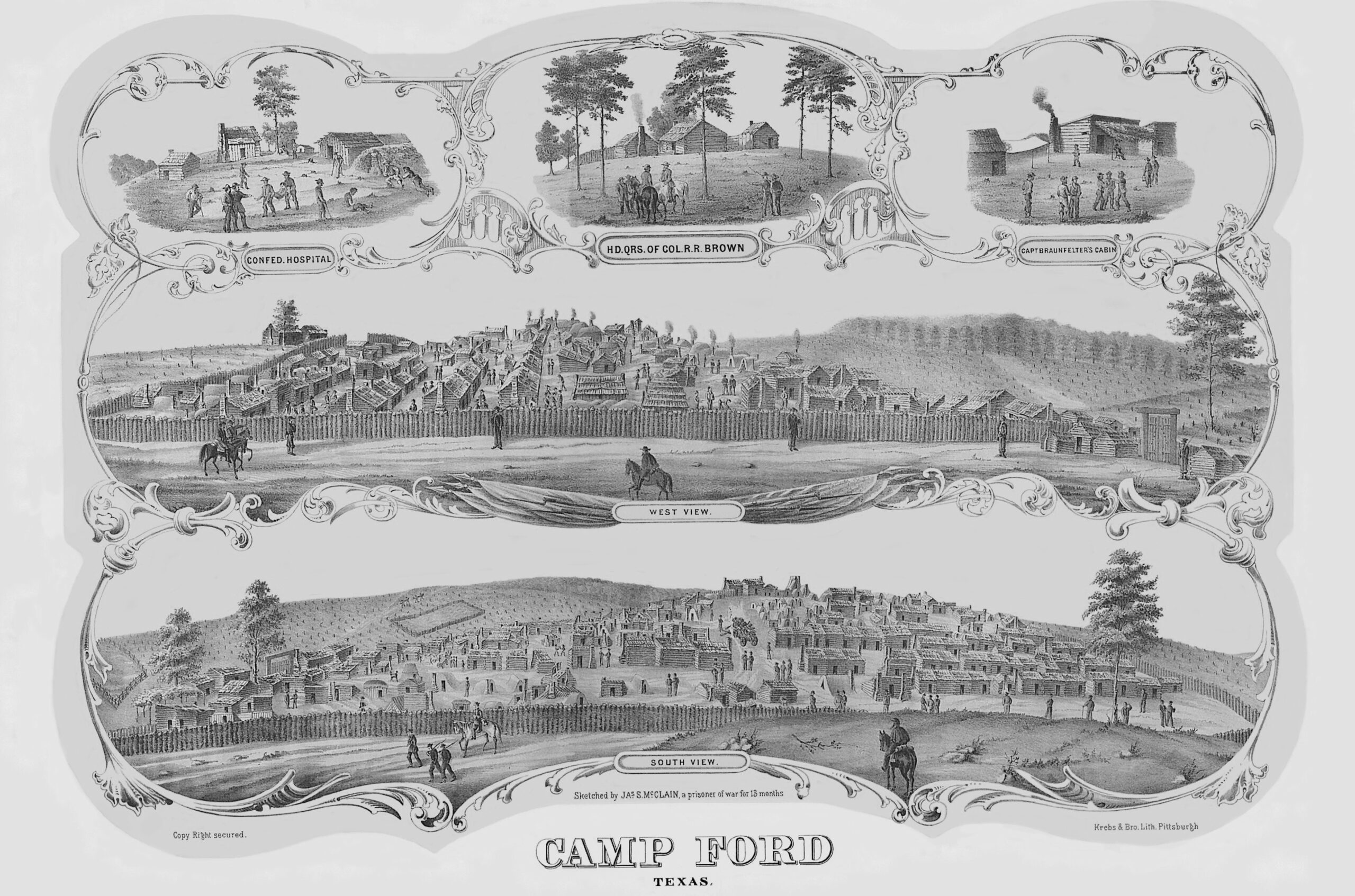
Camp Ford Lithograph
This c. 1865 lithograph provides a south view of the camp, with several smaller inset drawings.
The lithograph has been digitally restored and printed on 25.5" x 18.25" high quality paper. Copies may be ordered from the SCHS Shop.
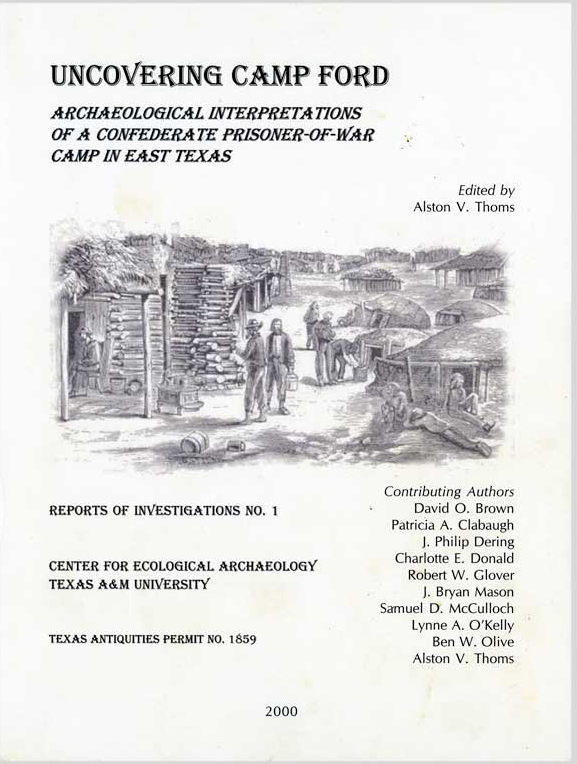
Uncovering Camp Ford
This in-depth report presents the findings and interpretations from the 1997–1998 archaeological investigations at the historic Camp Ford site, conducted under the direction of Dr. Alston V. Thoms of Texas A&M University.
This 390-page comprehensive study includes historical background along with a multitude of detailed charts, maps, and field photographs.
An essential resource for historians, Civil War enthusiasts, preservationists, and serious researchers, this technical work offers authoritative documentation of Camp Ford’s material history and the fieldwork that helped illuminate it.
Copies of the Uncovering Camp Ford may be ordered from the SCHS Shop.
References:
By US Army - http://www.tegermany.com/spiegel.jpg, Public Domain, https://commons.wikimedia.org/w/index.php?curid=14794156
